
Previous Residents of a Mecklenburg County Address
Use the source that fits the time period and question. POLARIS supplies the current parcel setting, including Parcel ID, GIS ID, postal address, owner mailing address, situs address, legal description, municipality, and land-use fields. The Register of Deeds supplies recorded instruments. Directories and newspapers can supply published household clues. Estate records and archives can connect a dated person to a legal or historical role. None of those sources alone proves uninterrupted occupancy, so the strongest result names the source, field, and date.
| Historical source | Coverage boundary | Custodian or route | What the source can show |
|---|---|---|---|
| Modern Register of Deeds index | March 1990-present | Mecklenburg County Register of Deeds | Recorded deeds and other instruments, subject to index and image limits |
| Historic Register of Deeds index | 1763-February 1990 | Historic Mecklenburg route | Older deeds, plats, conveyances, and chain-of-title leads |
| Charlotte City Directory collection | 1897-1989 documented run | Robinson-Spangler Carolina Room | Published names, work, and residence or business lines by edition |
| Newspapers and obituaries | Varies by title and issue | Library archives | Dated death, move, business, or community notices to cross-check |
| Wills, estates, maps, and county series | Varies by record set | Clerk and North Carolina State Archives | Legal roles, property context, and specific older-record leads |
The current parcel card is a starting clue, not a people list. Its owner field may lag a recorded deed, and its mailing address can differ from the situs or postal address. Preserve the field label and the access date before moving to older instruments.
Mecklenburg County Deed Index Periods
Mecklenburg County has a precise land-record hinge. The county separates the modern online land-record route, beginning in March 1990, from historic land records and images covering 1763 through February 1990. A search for previous residents that uses only one side of that split can skip the deed that transfers the address history into the earlier system. Begin with the known date, then search the correct index and record whether the result is an index hit, an available image, or a request for an official copy.
The historic Mecklenburg Register of Deeds index is the route for older instruments.
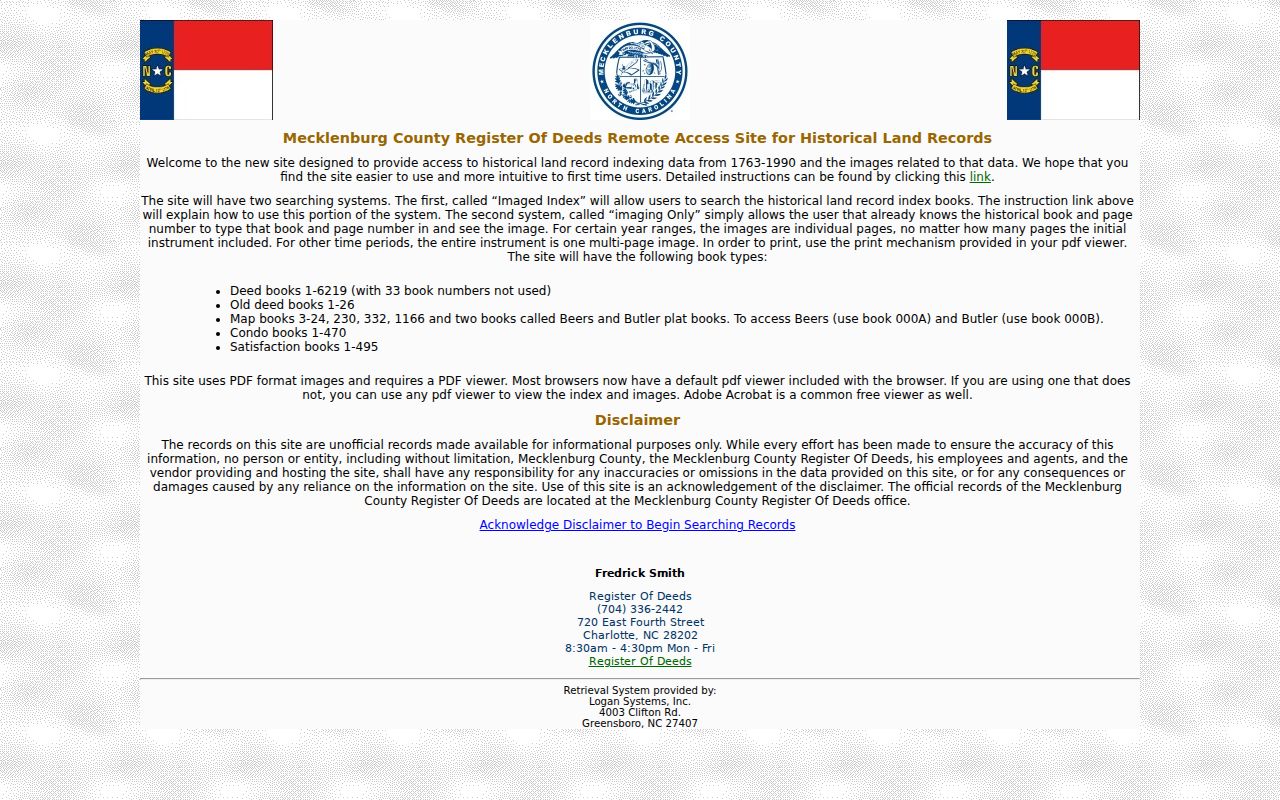
The historic index is a time-specific source for a deed chain, not proof that a named grantor or grantee occupied the property.
The Register of Deeds lists public inspection in its vault during the posted weekday 8:30 a.m. to 4:30 p.m. window. Online access is a convenience index and image service, while a certified copy or inspection through the office is the route when an official record is needed.
Mecklenburg County Previous Resident Parcels
POLARIS accepts an address, parcel number, owner, or landmark in its main search, and its Situs Address Search is useful when the physical address is the starting point. The viewer exposes tools such as Identify, Overlays, Print, Measure, and Markup. Capture the parcel and GIS IDs, all address labels, municipality, and legal description. The county warns that a GIS view is not legal evidence, and GIS ownership updates can lag the recorded instrument.
Keep the historic and modern forms of an address side by side: the printed directory address, deed legal description, plat or Sanborn intersection, USPS form, and current parcel. No complete official historic street-number crosswalk was located in the research, so a modern-to-historic match should be labelled documented or inferred rather than silently assumed.
Note: A parcel card can clarify location and field labels, but it does not identify everyone who lived at that address in a past year.
Walk the Mecklenburg County Deed Chain Backward
A deed chain follows recorded roles backward from a known instrument. Begin with the parcel's legal description and the latest document, then look for the seller's earlier acquisition. Record the date, instrument or book and page reference, role, document type, legal description, and image status at every link. The chain may involve trustees, heirs, estates, lenders, companies, or attorneys. Those roles describe the instrument, not a biography or a claim about who lived there.
- Use the address and parcel detail to obtain the current legal description and the most recent recorded lead.
- Search the current party in the modern or historic Register of Deeds index that matches the document date.
- Read the deed to identify the grantor, grantee, recording date, and earlier reference when supplied.
- Search the prior seller as a grantee to locate that party's earlier acquisition, repeating the process one instrument at a time.
- When the date crosses February 1990, change index routes and preserve the coverage transition in the research notes.
- Grantor
- The person or entity transferring an interest in the recorded instrument.
- Grantee
- The person or entity receiving the interest recorded in the instrument.
- Chain of title
- A dated sequence of recorded interests in property, assembled from the documents rather than assumed from an address alone.
- Legal description
- The parcel wording in the recorded instrument, often more stable than a street address when lots or street numbers change.
The Register of Deeds fee schedule lists $5 for the first page of a certified real-estate copy plus $2 per additional page, $0.25 per page for a non-certified in-person copy, and $1 per page by mail. Confirm the current fee and route with the office before ordering.
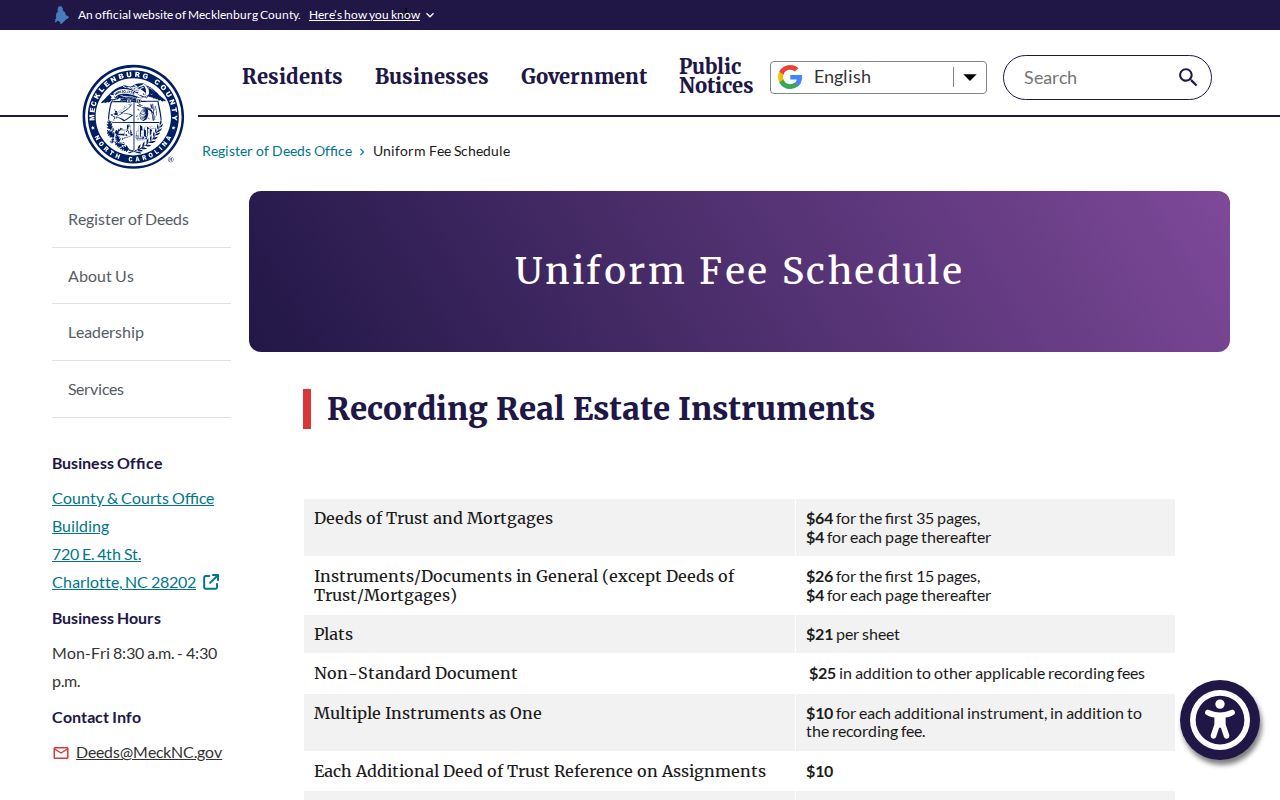
Planning the copy route in advance separates an informal online lead from the record or certified copy needed to support a narrow historical claim.
Mecklenburg County Directory Evidence
Deeds identify recorded interests, but past residents often appear only in a directory, newspaper, or other contemporaneous source. The Carolina Room's documented Charlotte City Directory run is 1897 through 1989. Its current public pages do not publish a complete criss-cross inventory, so ask staff whether a requested year has an address-indexed edition. The collection details and entry grammar are available through the Mecklenburg County city directories collection.
Use a simple source ladder: printed directory entry, nearby available edition, accessible census schedule where relevant, date-specific newspaper or obituary, then recorded instrument or estate item. Compare initials, suffixes, occupation, spouse or household notation, and address. A directory can reveal boarders, adult children, employees, and business connections that do not appear in title records, but a single line should never carry an entire family history.
The library's Charlotte Observer holdings are described as searchable by name, keyword, or phrase, with library-card remote access. Capture the issue date and page. An obituary is a dated family statement that can cross-check a directory line, not a substitute for an official property or probate record.
Mecklenburg County Archive Requests
When a prior address trail reaches beyond the library shelf or online deed index, the North Carolina State Archives copy-request form is a specific-record backstop. It asks for a county, year, name, and the relevant series. Available choices include deeds by book and page, cemetery surveys, land grants, court minutes, wills, estates, guardians, divorces, marriage records, cohabitation records, and maps. This is not a general genealogy request form, so identify the most likely item before submitting it.
The research form lists $2 for an in-state request up to 20 pages plus $0.10 per additional page. For out-of-state requests, it lists a $20 upfront package including up to 20 pages and four color scans, then $0.10 per additional page. The form's current instructions govern the request.
The State Archives request form shows the series options for a Mecklenburg County address-history search.
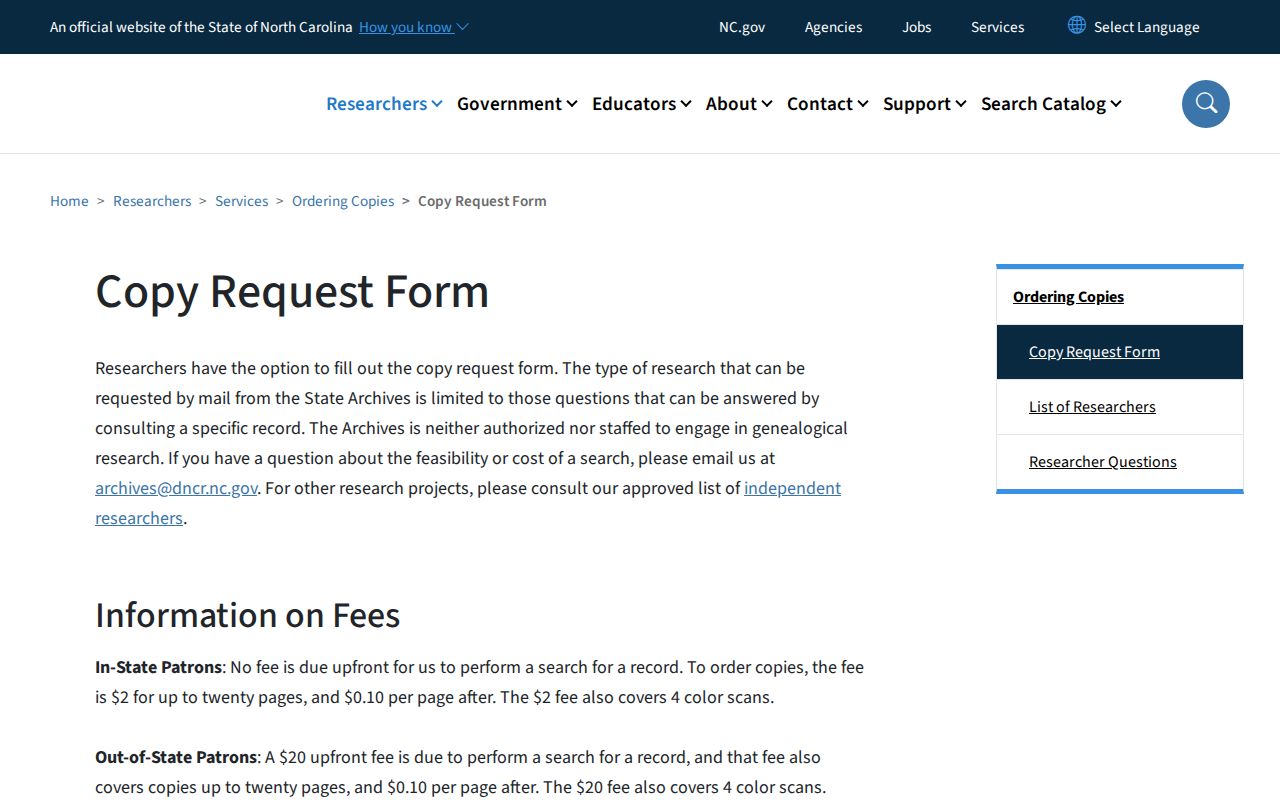
An archive request works best when it asks for one existing series and date range instead of asking staff to reconstruct a complete list of past occupants.
Mecklenburg County Estate Endpoints
Wills and estates can connect names, property, executors, heirs, devisees, guardians, and attorneys. The Mecklenburg County Clerk of Superior Court is the probate judge, and the courts say filed wills may be viewed or copied for a fee. Estate roles are legal-document roles, not proof of a present household. For older material, the State Archives county-record resources and historical collections are often the more appropriate next step.
North Carolina Vital Records is another date-sensitive route, not a general people search. Its research material points older births to the county Register of Deeds, deaths before 1930 to the State Archives, marriages before 1962 to the county Register of Deeds, and divorces before 1958 to the Clerk of Court. Mecklenburg's local office states births and deaths from 1913 forward. Eligibility rules and record type determine whether a copy can be issued.
The North Carolina Vital Records research page explains the historical record pivots.
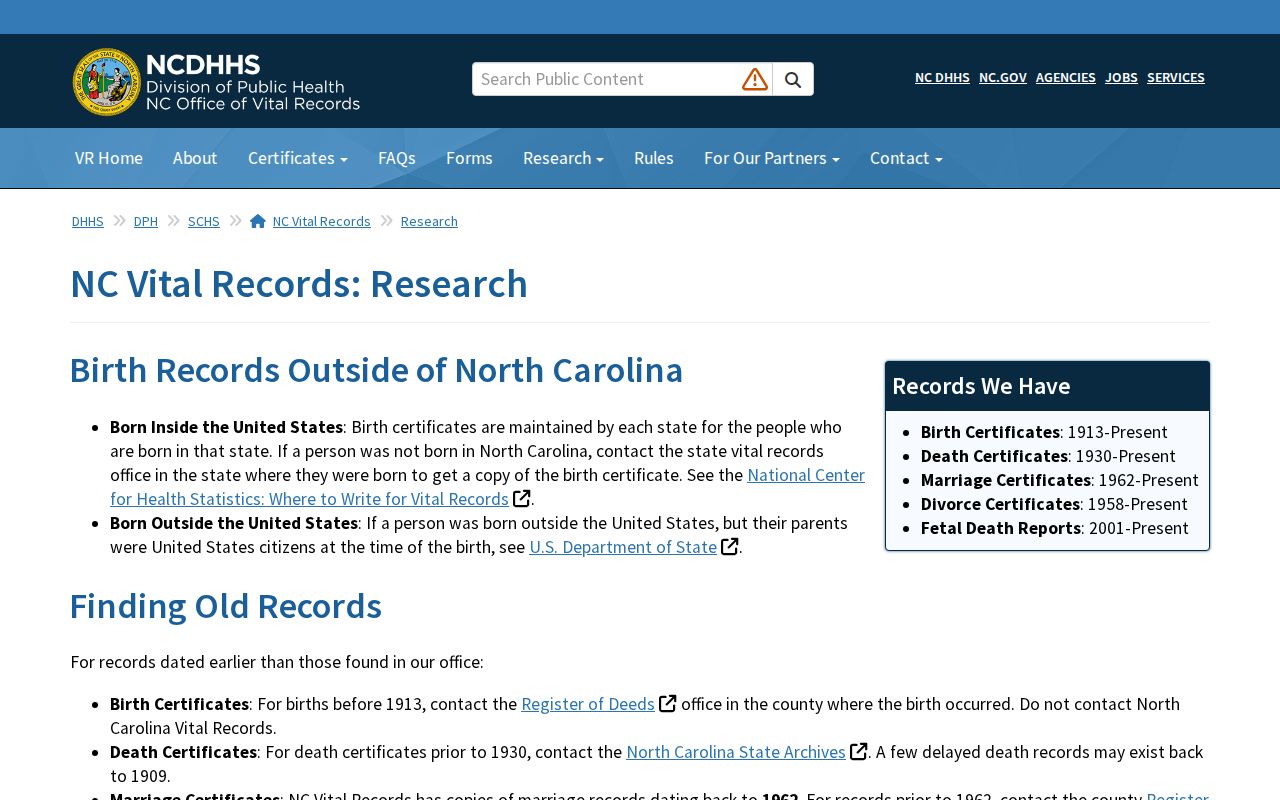
A death, marriage, or other vital-record lead may clarify a date, but it should not be used to publish restricted details or infer a current address.
A cemetery source is similarly limited. Charlotte's cemetery office and historical exhibits can support an interment lead, while a burial record does not establish where a person lived at a particular time.
Mecklenburg County Address-History Limits
A no-hit is not a negative fact. The address may be under a former number, the person may be listed by initials or a married name, the edition may be missing, the record may be restricted, or the document may remain with another custodian. Write the narrow result: “the 1957 directory lists” or “the 1949 deed records,” then identify the next source. This keeps a house-history trail reproducible and avoids turning a single database result into a personal profile.
For estate contact and older court files, begin with the Mecklenburg County court location page. The local directory lists an Estates route, and records before the county's October 9, 2023 eCourts transition may require a request through the proper clerk division rather than a portal-only search.
The Mecklenburg County court page provides the clerk and courthouse route for those records.
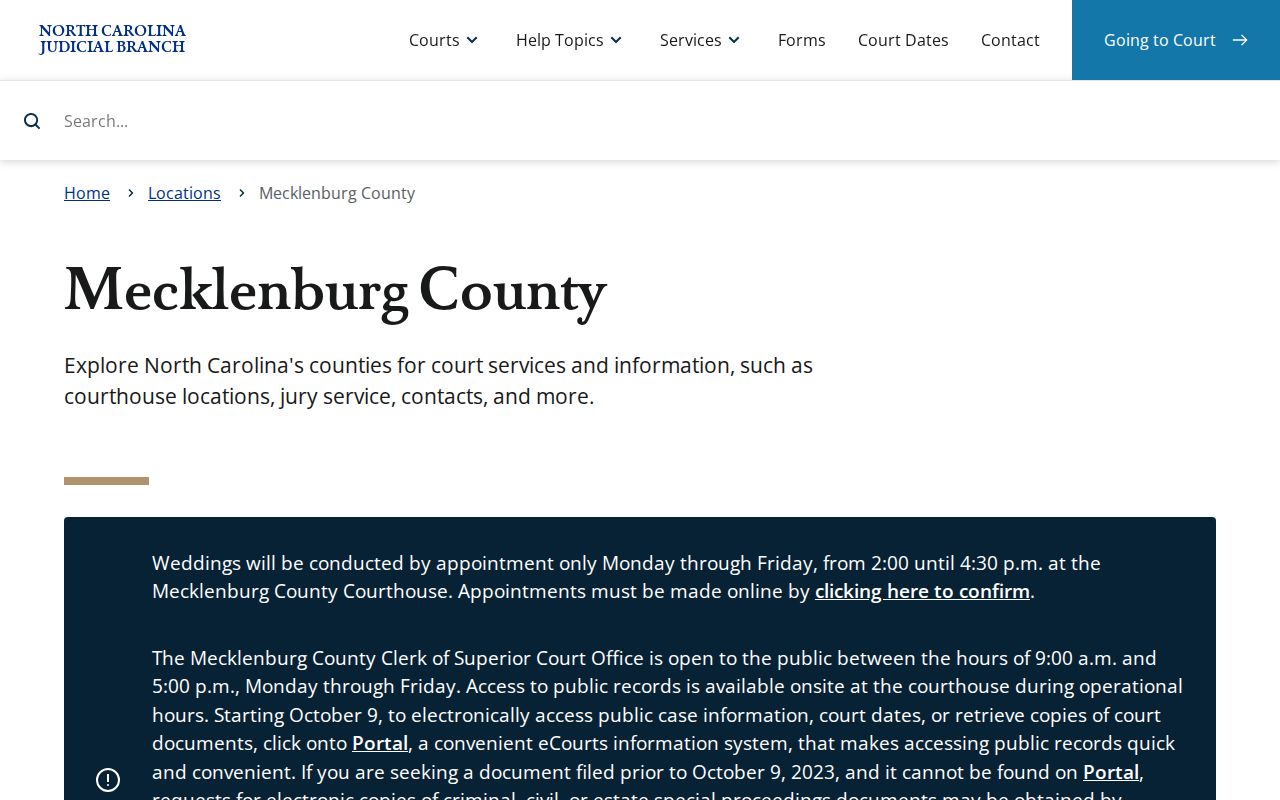
The court route is useful for a specific estate or case file, while its public access limits should be respected at every step.
Lawful use. Use prior-address research for family history, house history, and personal curiosity. Do not use any source to track, harass, or harm a living person.
Note: Keep the source URL, record date, access date, page or instrument identifier, and the limited fact each source supports.