
Mecklenburg Resident Lookup Records
One person can appear in several Mecklenburg County systems, but each system answers a different question. The county property tools connect a parcel to an owner, mailing address, situs address, and legal description. The State Board of Elections lookup is a civic record with status and jurisdiction information. Court tools identify a party role and a case trail. Vital-record routes establish recorded life events under eligibility rules. A sound resident lookup begins with the record whose purpose fits the question, not with a broad attempt to assemble every available detail.
| Record route | Best dated confirmation | Custodian | Access path |
|---|---|---|---|
| Parcel and property fields | Owner role, mailing or situs field, parcel ID | POLARIS and county tax tools | Public GIS and property interfaces |
| Voter record | Registration status, jurisdiction, polling-place context | North Carolina Voter Search | Public form with limited fields |
| Court docket | Party role, case number, filing and event dates | NC eCourts Portal | Public docket, not the official file |
| Vital record | Recorded birth, death, marriage, or divorce event | North Carolina Vital Records | Official request and eligibility route |
| Historic land record | Grantor or grantee role, instrument, date | Historic Register of Deeds index | Historic index and image route |
For a current address question, normalize the address, inspect the parcel fields, and keep owner and occupancy separate. For a named court matter, begin with a case number or a precise party-and-date search. A historical person may require the Carolina Room, State Archives, historic deed index, or Clerk instead of a modern portal. The result should be described as a listing, party role, or parcel field for a specified date, rather than as an unsupported statement about where someone lives.
Choose a Mecklenburg Resident Record
Use the record purpose as the first filter. A property card is useful when a parcel is known, while a voter search is useful for a carefully scoped civic question. A business or license address can document a public filing or credential, but it may be a registered, practice, or mailing address rather than a residence. A city directory or newspaper is usually stronger for a historical listing, and an estate file can show a legal role without proving a current household relationship.
The most reliable note preserves the source name, custodian, URL, access date, event or edition date, displayed role, and the label attached to any address. That discipline makes conflicting records easier to understand. A 1998 deed, 1999 tax card, 2000 directory entry, and 2001 voter record can each refer to different dates and purposes. A no-hit also needs its scope: it means the record was not found in that custodian, query, and date window, not that no record exists.
Record-match tip. When two people share a name, compare a middle initial, suffix, role, date, parcel or case number, and one independent official source before treating the entries as one person.
Mecklenburg Resident Voter Fields
The official voter form requires first and last name. Middle initial, year of birth, and county narrow the search, and at least one status choice must be selected: Registered, Removed, or Denied. The result may provide voter details, jurisdictions, polling-place information, a sample ballot when available, absentee information, and voter history. Common names, a recent move, a removed record, or a wrong year can still produce a near match, so a voter result is a corroborating civic source rather than a complete identity answer.
| First Name | Required on the North Carolina Voter Search form. |
|---|---|
| Middle Initial | Optional narrowing field. |
| Last Name | Required on the form. |
| Year of Birth | Optional selector that helps distinguish like-named voters. |
| County and Status | County selector plus Registered, Removed, or Denied choices; at least one status is required. |
The State Board of Elections voter-record guide shows the official context for the voter fields and history available to a searcher.
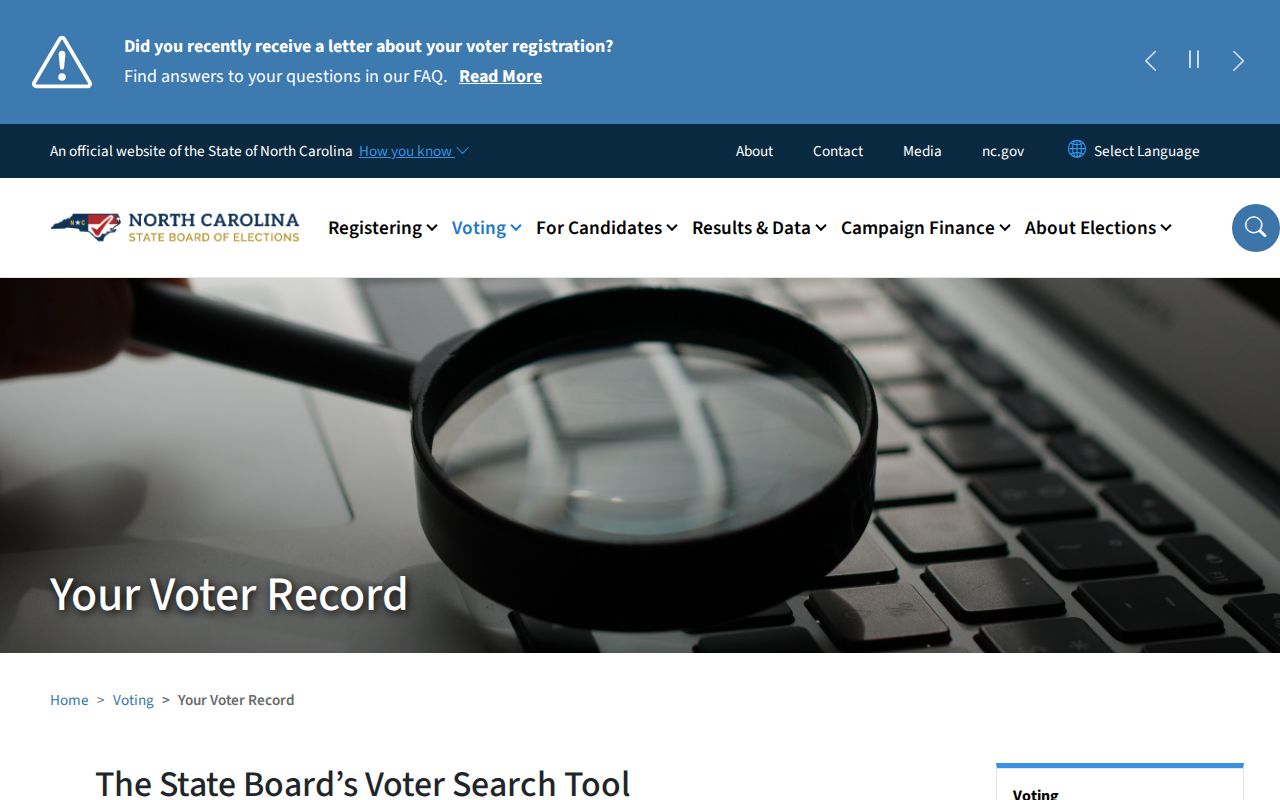
Voter history records an election date and method, and may show a primary ballot party field. It does not disclose a candidate selection, and recent history can take time to appear.
The NCSBE voter-registration data page distinguishes downloadable files and historical snapshots from the individual lookup.
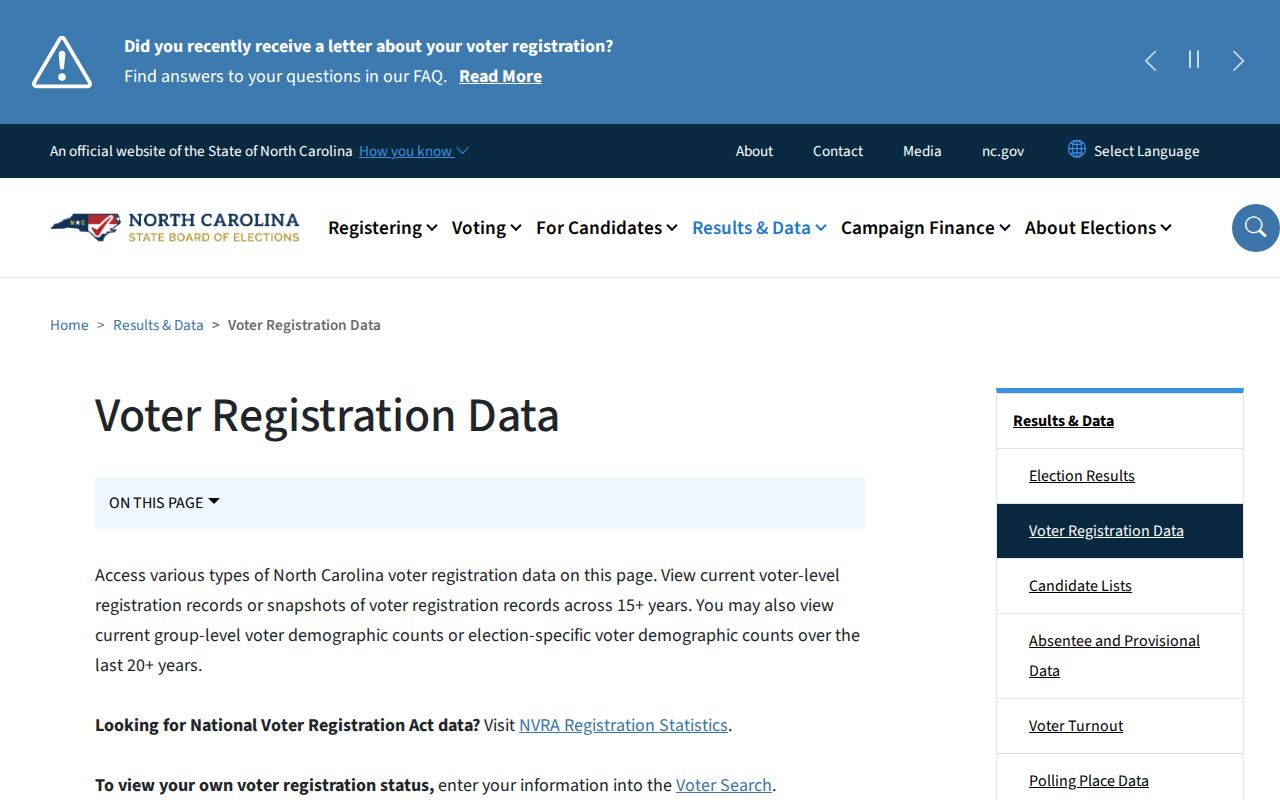
File version and update date matter because the Board says current data updates weekly and older removed records are not retained indefinitely in the public files.
Note: Never copy signatures, full dates of birth, Social Security data, protected addresses, or private email from an election record.
Mecklenburg Resident Court Dates
NC eCourts offers Smart Search for a party name, case number, citation, attorney, business name, case cross-reference, or nickname. Its advanced filters cover civil actions, non-confidential special proceedings, estates, and criminal cases. The docket can return a case summary, Register of Actions, parties, causes of action, events, dispositions, hearings, and financial information. Use a narrow field and record the case number, role, filing date, and event type. The portal is free for public use, but it is a public docket interface rather than the official court record.
Mecklenburg moved to eCourts on October 9, 2023. Documents from before that transition can be absent from the portal and may need a request to the appropriate criminal, civil, or estates division of the Clerk of Superior Court. Paper files remain with the local clerk, and public self-service terminals are available in county courthouse locations. An official copy comes from the clerk, not from a portal screenshot.
The Mecklenburg County court contact directory identifies the current divisions and official local routes.
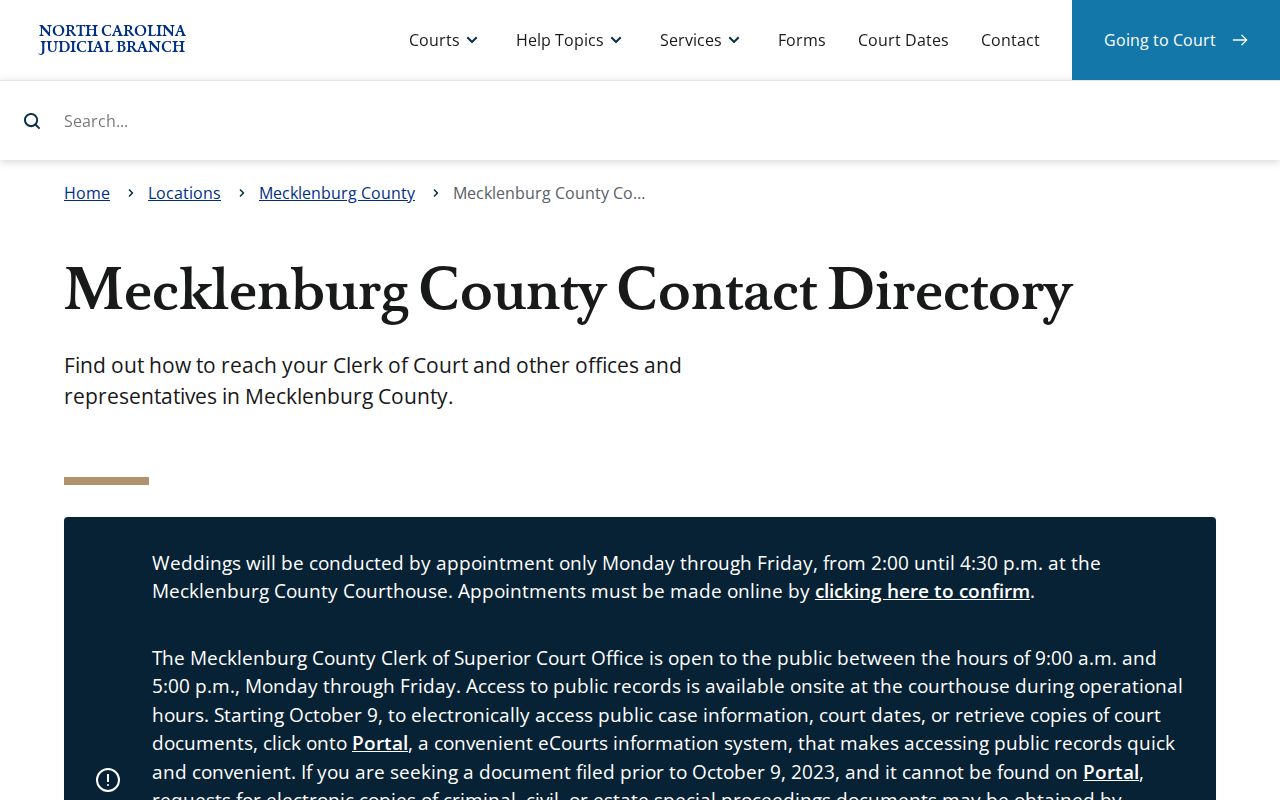
For an estate question, the directory identifies an Estates route, while the Clerk remains the source for public wills and official copies. A docket entry is not a judgment, and a party name can belong to an attorney, fiduciary, business, or another person with the same name.
The North Carolina court-record access guidance explains the clerk and terminal routes for public records and official copies.
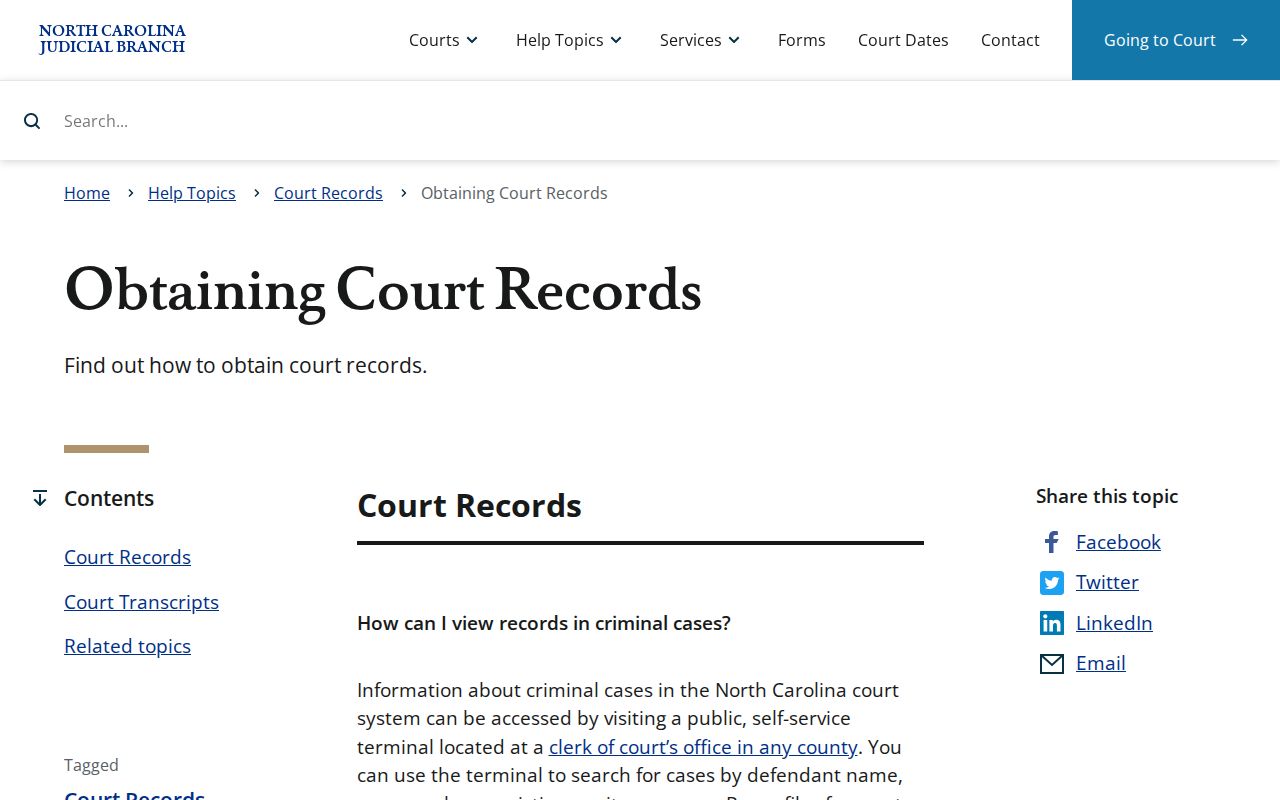
Use the court’s stated access route when a public case document is needed, and keep restricted case categories outside a resident record search.
Verify a Mecklenburg Resident Across Sources
Verification is a sequence, not a single matching name. Start with an address or name that has a date attached, then choose the custodian whose record is designed to answer that point. Compare only the needed, non-sensitive fields. If an address differs, first identify its label: situs means the property location, mailing means where correspondence goes, and a directory or voter address has its own date and purpose. A mismatch can be normal rather than evidence of a move or error.
- Normalize the known address and locate the parcel in POLARIS. Record the parcel ID and whether the displayed address is situs or mailing.
- Search the relevant dated record, such as the voter form for a civic question or eCourts for a specific case. Preserve the exact name string and search date.
- Compare one independent source that shares a stable detail, such as a dated address, case role, instrument, middle initial, or edition year.
- Request an official copy from the custodian when the question requires proof. Keep the response date, fee notice, and any stated limitation with the result.
- Docket
- A court’s dated list of case events, parties, hearings, and entries. It is not, by itself, a finding that a claim is true.
- Index and image
- An index points to a record through searchable fields. An image is the document view, which can be missing, redacted, or available only through the custodian.
- Certified copy
- A copy issued by the office that holds the record. It has a different purpose from a convenience-screen view and may have an eligibility rule or fee.
A full street-by-street trail is a different task. The Mecklenburg street directory focuses on address-keyed parcels, deeds, and permits without turning a one-person check into a whole-block profile.
Mecklenburg Resident Privacy Limits
North Carolina’s Public Records Act, Chapter 132, starts with access to existing public records but allows confidential fields and redactions. A custodian does not have to create a new compilation because someone asks for a list of people or inferred household relationships. Protected examples include full Social Security and driver-license data, birth and parent information, sensitive court matters, personal identifiers in deed images, and addresses protected through voter rules or the Address Confidentiality Program.
The voter protections in Chapter 163 can withhold an address when a qualifying order or Address Confidentiality Program authorization applies. Chapter 15C provides a substitute-address program for eligible victims of domestic violence, sexual offense, stalking, and human trafficking. If an official source indicates that an address is protected, stop the address trail. Do not use property, directory, or social sources to reconstruct it. A parcel mailing address should also never be presented as a residence merely because it appears on the same card.
Lawful use. Use a Mecklenburg resident lookup for a narrow, lawful personal or historical question. Do not use a record trail to stalk, harass, intimidate, or harm another person.
Mecklenburg Resident Record Requests
When a public portal does not contain the needed record, ask the correct custodian for an existing document or field. Under Chapter 132, an inspection request should identify the agency, date range, record series, address, parcel, case number, book and page, or instrument number. Ask for electronic copies if they exist and ask staff to identify another custodian if the record belongs elsewhere. Broad requests to identify all residents or make a new research judgment are not the same as requests for an existing record.
The North Carolina inspection statute says records should be available as promptly as possible, consistent with operations and applicable exceptions. Copy charges can reflect direct cost, and special service charges may apply to unusually technical or labor-intensive work. For older records, the State Archives copy request is intended for a specific series, county, year, and name rather than a general genealogy search.
Keep a gap note if nothing is found: name the source, query, date range, access date, and stated coverage. That note respects the limits of the record and helps avoid turning a missed portal result into an overconfident claim.
Mecklenburg Resident Results Need Dates
A resident lookup result is strongest when it states exactly what the source says and when it says it. “Listed in a directory,” “recorded as grantee,” “parcel card shows,” and “public docket records” preserve the source’s role and avoid claims the record cannot prove. Save the URL, access date, edition or filing date, and a short note on what was deliberately omitted for privacy. That small record of method is especially useful when a portal changes or a field is later corrected.
Official sources can disagree without one being wrong. Their dates and purposes may simply differ. Treat that difference as a reason to verify, not a reason to combine separate public records into a larger personal profile.